Stop producing content that disappears.
Start building ecosystems that compound growth across every market you serve.
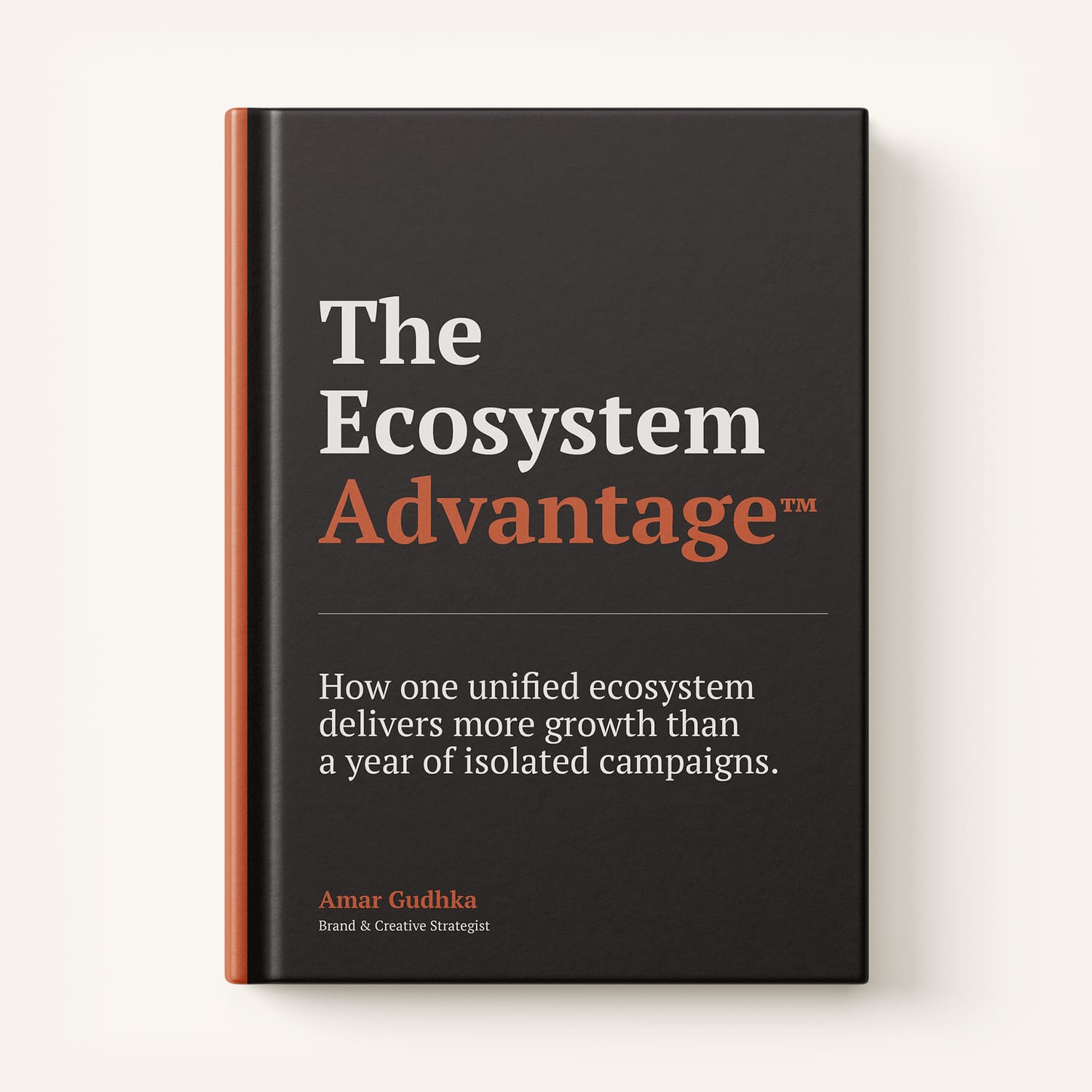
Discover why your best content gets ignored whilst competitors with "worse" work drive measurable growth
Learn the hidden architecture that turns isolated campaigns into interconnected systems that work 24/7
Build your first revenue-driving content ecosystem in 30 days without hiring new team members
You're not producing bad content. You're producing disconnected content.
Your internal team delivers campaign after campaign. Launch after launch. Asset after asset. But nothing connects. Nothing compounds. And the growth you're chasing never matches the effort you're investing.
Here's what's really happening: every piece of content you create exists in isolation. Your event collateral doesn't talk to your social posts. Your regional campaigns ignore local nuances that matter. Your best assets get used once, then buried in a folder no one remembers. You're not building an ecosystem. You're building a content graveyard.
The companies winning in your market have built unified content ecosystems where every asset connects, every message aligns, and every touchpoint reinforces the last. And whilst you're starting from scratch every quarter, they're watching their growth compound.
🎯 Inside this comprehensive guide, you'll learn:
✔ Why increasing content output actually decreases returns. And the structural shift that reverses this.
✔ The exact definition of a content ecosystem, and an honest assessment of whether you have one.
✔ Four measurable business outcomes you're leaving on the table without ecosystem thinking.
✔ The hidden architecture behind content that compounds: core assets, derivatives, and connected distribution.
✔ How to build your first working ecosystem in 30 days using what you already have.
✔ Why your event investment needs ecosystem infrastructure before, during, and after.
✔ How global companies scale regionally without losing local relevance through ecosystem design.
✔ The exact support system that helps marketing leaders build ecosystems without adding headcount.
PLUS, you'll also get:
✔ A clear framework for auditing your current content structure.
✔ Real examples of how ecosystem thinking transforms ROI.
The marketing leaders driving predictable growth aren't more creative. They just have a system you don't.
This isn't another guide telling you to "post more consistently" or "try a new platform." This is a complete reframe of how content works when it's built to compound instead of disappear.
You'll discover why the problem isn't your team's talent, your budget, or your ideas. It's that everything you create lives in isolation. And isolation doesn't scale. It doesn't compound. It just exhausts your resources whilst your competitors build momentum.
Then you'll learn exactly what a content ecosystem is, how to recognise whether you actually have one, and why most marketing teams are unknowingly sabotaging their own growth by thinking in campaigns instead of systems.
Here's what you'll walk away knowing how to do:
👉 Identify the four critical business outcomes you're missing without ecosystem infrastructure, and quantify what that's costing you
👉 Understand the hidden architecture that makes content compound: how core assets, derivative content, and distribution channels must connect to create momentum
👉 Build your first complete content ecosystem in 30 days using existing assets, without starting from scratch or hiring new team members.
👉 Design ecosystem infrastructure around your event investment so every pound spent works before, during, and after the event itself.
👉 Create regional ecosystems that respect cultural nuances and drive local growth without losing brand consistency across markets.
👉 Recognise why your internal team struggles to see the value of regional content, and how ecosystem thinking solves this communication gap.
👉 Implement a support system that helps marketing leaders build and maintain ecosystems without adding to your team's workload.
👉 Shift from "we need more content" to "we need content that connects." That is the mindset change that unlocks compounding growth.
By the end, you won't just understand why your current approach isn't working. You'll have a clear, actionable blueprint for building content that performs across every region you serve.
Not at all. In fact, smaller teams often benefit more from ecosystem thinking because they can't afford to waste resources on disconnected campaigns.
The ecosystem approach isn't about producing more content. It's about making what you already create work harder. Whether you're a lean internal team or a global marketing department, the principles are the same: connection compounds, isolation exhausts.
You don't need a bigger team. You don't need a bigger budget. You need a better structure. This guide shows you how to build that structure using the assets and resources you already have, so you stop starting from scratch every quarter and start building momentum that carries forward.
The guide includes a 30-day implementation pathway, but the timeline adapts to your reality.
If you're starting completely from scratch, you'll spend the first week auditing your existing content and identifying core assets that can anchor your first ecosystem. Week two focuses on mapping connections and creating derivative content. Weeks three and four are about distribution and measurement.
But here's what's important: you're not building the entire ecosystem at once. You're building your first ecosystem. One focused area that proves the model works. Once you see the compounding effect in action, scaling to other areas becomes faster and more intuitive.
Most marketing leaders report seeing measurable shifts in engagement within weeks, as assets begin working together instead of competing for attention.
Because this isn't a content strategy. It's a content structure.
Your internal teams have likely delivered one-off campaigns that performed well in isolation but didn't create lasting momentum. You've probably explained the importance of regional nuances without getting buy-in. You've created brilliant assets that got used once, then forgotten.
The problem wasn't the quality of those campaigns. It was that they lived in isolation.
This approach builds interconnected campaign ecosystems where every asset connects to a larger system. Your event content feeds your social content. Your regional campaigns respect cultural nuances whilst maintaining brand consistency. Your core assets become the foundation for dozens of derivatives that extend reach without starting from scratch.
Instead of convincing your team to work differently, you'll show them a structure that makes their work compound. That's the shift. Not better creativity. Better architecture.
That's exactly why you need an ecosystem.
Right now, your team is probably rebuilding from scratch every time there's a new campaign, event, or regional initiative. That's not sustainable. That's why you're burnt out.
Ecosystem thinking doesn't add to your workload. It restructures it so the work you're already doing creates compounding value instead of one-time outputs. You'll use existing assets as foundations. You'll create derivatives, not entirely new pieces. You'll connect what you've already built instead of starting over.
The 30-day build process outlined in the guide fits into your current workflow. It's designed for marketing leaders who don't have spare capacity, which is why it focuses on restructuring what you're already doing, not piling on more tasks.
And if you need support implementing this without adding headcount, Chapter 8 walks through exactly how that works.
No. This is about strategic structure, not technical complexity.
You don't need new software, expensive tools, or a tech team to build a content ecosystem. The ecosystem framework is platform-agnostic. It works whether you're using basic tools or enterprise systems.
What you need is clarity on how assets connect, how messaging aligns, and how distribution channels reinforce each other. The guide walks you through the thinking, the architecture, and the practical steps without requiring technical expertise.
If you can create a content calendar, you can build an ecosystem. The difference is in how you think about what goes in it.
Then you need this approach more than anyone.
Chapter 7 specifically addresses how global companies scale regionally without losing local relevance. This is where most marketing teams fail. They either force one global message that feels tone-deaf in local markets, or they create completely disconnected regional campaigns that dilute the brand.
Ecosystem thinking solves this by creating a core brand architecture that adapts regionally whilst maintaining consistency. You'll learn how to build regional ecosystems that respect cultural nuances, speak to local pain points, and drive growth in specific markets, all whilst feeding into a unified brand presence.
Your regional teams will finally have the structure to create locally relevant content without needing approval for every asset. And your global leadership will see brand consistency maintained across every market.
There's no catch. This is genuinely valuable.
I'm giving this away because most marketing leaders don't even realise the problem is structural. They think they need better content, more budget, or a bigger team. Once you see that the real issue is disconnection, and that ecosystems solve it, you'll understand how much growth you've been leaving on the table.
After reading this, some leaders will implement it themselves and see brilliant results. Others will realise they need support building and maintaining ecosystems without adding to their team's workload. Either way, you'll be better off than you are now.
The value is real. The framework works. And whether you implement it alone or with support, you'll finally have a structure that turns content into compounding growth instead of isolated outputs.
You'll leave with:
👉 A complete understanding of why your current content approach isn't delivering compounding growth.
👉 The exact definition and structure of a content ecosystem that actually works.
👉 Four measurable business outcomes you can start tracking immediately.
👉 A 30-day implementation blueprint for building your first ecosystem using assets you already have, mapped across the full lifecycle before, during, and after every event.
👉 A framework for getting internal buy-in without repeatedly explaining the same concepts.
👉 Clarity on whether you need external support, and exactly how that works without adding headcount.
Most businesses are one ecosystem away from accelerating their growth. This guide shows you how to build it.
Download the Free Guide now.
Stop producing content that disappears. Start building ecosystems that compound growth across every market you serve.
We HATE spam. Your email address is 100% secure